.

Showing posts with label Footwear. Show all posts

Advent - Day Twenty Three


3939 launched as a lifestyle and retail concept located in the basement of a well loved Japanese restaurant, Life just last month. Set up by three creative friends in Tatsuo, Pippa and Peter. Both the physical and digital spaces showcase the trios unique ideas, collaborations and exclusive products which have been developed in association with the craftsmen and talent that they all adore. This is a truly independent project driven forward by the determination to offer something different. 3939 incorporates a unique point of view and leaves me excited in the process. Having provided me with a wealth of present options for my nearest and dearest, I just had to find out what was on Tatsuo Hino's Christmas list and here it is...

__________

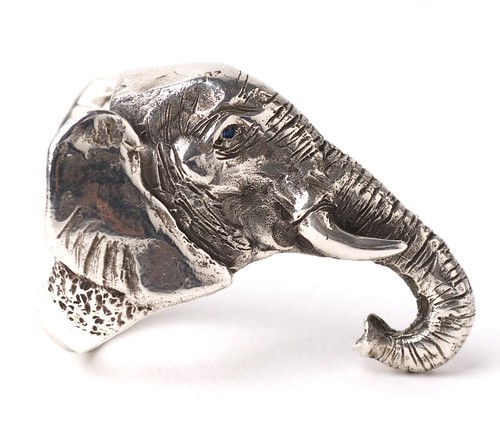
ELEPHANT RING BY DOG STATE


The item is the 'Elephant Ring' by Dog State . I have actually ordered to have it resized for me when I am back from Japan early next year. It is made by my friend, Toshi, who is based in London and trained at the Great Frog for eight years as residential shop keeper and designer. What I like about it is that the detailing about the face is so intricate. I cannot wait to wear this!
__________

LEWIS D LTD 204A FLYING BOOTS


My ideal Christmas gift would be the Lewis D Ltd Flying boots with shearing inside. I recently tried a pair on at the Lewis Leathers store. They were reintroduced the boots back into the range after carefully researching them right down the to the correct buckles of the original pair from the 30s. The shearling lining is sourced from a Tannery in the West Country, the leather nowadays is a high grade Cowhide for durability during everyday wear, soles are leather and the heels are rubber with a pattern identical to those found on many vintage RAF flying boots. They are a classic with heritage, sleek but modern and functional boot commanding a reasonable price (£350) for what they are.
__________

Advent - Day Two


To welcome in the second day of advent, we asked the buyer of London's most exciting concept store to reveal the one item that he hopes to find tucked under his christmas tree this. With the snow moving towards the capital, LN-CC's Dan Mitchel has plumped for a pair of beautifully crafted boots that would save his feet from the elements and their vibram morflex sole will no doubt keep him vertical.
__________

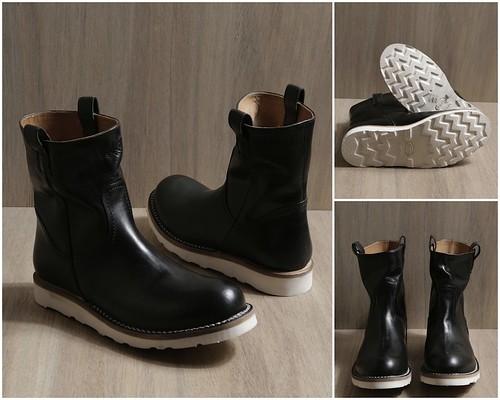
NONNATIVE BUFFALO HUNTER PECOS BOOTS


"I would love to find a pair of these under the Christmas tree this year. The harsh London winter is now kicking in and these boots are a much needed addition to my footwear collection!

The Buffalo Hunter boots from Nonnative are the best out there in my opinion. You can always count on Nonnative for quality production and craftsmanship. Solid boots made with from beautiful buffalo leather with a lightweight vibram Morflex sole unit. Will better with age and will last a lifetime."
__________

Unpicking the seams... British Remains' First Creeper

First Creeper Feature Button

Following years of discussion centred around aspects of Britain that they like, hate and mourn, Daryl Saunders and Andrew Bunney launched British Remains. Unveiled last summer, the debut range of t shirts and totes set the tone by celebrating facets of Britain and localised symbols that would ordinarily not be known outside of these shores. Amongst the neglected and the forgotten rubble of Britain, London brickwork, toilet signage and Generation X were all highlighted. In offerings since, the pair have focused their design attention on the Royal Wedding and most recently celebrated the sneering youth spirit of 'them' and 'us'. For AW11, they reveal their first shoe - First Creeper.

Adopted by various youth tribes and factions of the British underground throughout the last half century, the wonderfully named shoe still has the ability to excite by providing quite the visual statement. A heady mix of comfort and rebellion. Traditionally a suede shoe with thick crepe soles, the creeper was borne out of necessity in the years following World War II. British soldiers returning from the desert wars had worn suede boots to which they had attached improvised rubber soles made from old rubber tyres. It is a Mary Shelley tale of a shoe. Returning to London, unsurprisingly the ex-soldiers were attracted to the most desirable undesirable “night spots”of Kings Cross and Soho. As they found their pleasure, they were still wearing this rubber sole footwear or derivatives that had been put together by their cobblers. Creeping around brothels was enough to give the shoes their name. Now, the brothel creeper immediately evokes images of youth, musical movements and hints at the more rebellious corners of society. 

With the mere mention of brothel creepers today, one immediately thinks of George Cox. Therefore, it should come as little surprise that the First Creeper was made in its spiritual home. In 1906, George James Cox founded his shoe company in the heart of England's traditional shoe making region, Northamptonshire. Crafting high quality traditional footwear at first, the company quickly gained fame for the iconic styles that would come to inspire generation after generation of subcultures. From the brothel creepers of the 1950s to the winkle pickers of the 1960s, George Cox have still produce delightful underground styles. Not interested in costume, British Remains wanted to create a creeper that stayed true its tradition whilst making creating a far more accessible shoe. With the thick crepe sole and aggressive notched leather welt softened by the simple suede leather derby upper, their First Creeper undoubtedly pulls it off. From the moment Bunney posted an image of the initial sample back in May over on honeyee, I just knew my ever growing shoe collection needed them. I've obsessed and dreamed about them ever since. Yesterday, following a quick visit to Goodhood my feet's dreams came true. To mark this happy moment and even before I took them out for a pavement stomp, I caught up with Bunney to learn more about my latest fixation...
----------

IMG_1714
British Remains' First Creeper

SS: The First Creeper marks British Remains' first foray in to footwear design. What attracted you to the creeper?
Andrew Bunney: As the name suggests, the label is an exploration into the rubble of Britain. Amongst the neglected and the forgotten there are often gems, and the Creeper shoe represents something really exciting. The nature and shape of the shoe, the nefarious associations that it had, and connotations today make it something quite challenging to wear.

SS: What was your starting point/initial inspiration?
Andrew Bunney: Thinking about British style and British youth cultures, there is always an exciting moment where the looks start to merge and change into something new. What I believe in is creating products that different kinds of people can wear in their own unique way, something that I've done throughout my career. To make something with character that captures the imagination of people into all kinds of things is very special.

SS: Could you talk us through your research and how it impacted on the design? For example, I recall that you mentioned that the sole is the same height as many vintage styles.
Andrew Bunney: It's always interesting to see how things have progressed or changed over the years, and many of the creeper soles today are very high - very cartoon-ish. The classic styles didn't always have soles this high, and of course the idea was always to make this more accessible for today. We used the same height of sole that was used in the past, which would have been sold in places like 'Let It Rock' - one of the most important places for styles to butt up against one another.

SS: How did you go about stamping your take on this iconic shoe?
Andrew Bunney: The most important thing is to push forward - we're not interested in making costume. There are many things I like about vintage Creeper styles, but I want to make something that is relevant to what we're wearing today. The thick sole or aggressive looking welt are very much a 'Creeper', but the simple derby upper makes it much more wearable, and more modern.

SS: Craft and local manufacture are obviously very important to you. Collaboration with local craftsmen and heritage is an integral facet of your brand identity. Here you teamed up with George Cox, how did you identify the individuals to help realise your design?
Andrew Bunney: In some ways today, I think many have lost sight of the manufacturer or have a very hazy understanding of what that means. Of course, we want to find the best factory or the manufacturer for anything that we're making. Despite the many copies by other brands, this style is synonymous with the manufacturer George Cox - there is no other company to go to. However, I don't really think of this as a collaboration - simply using the 'correct' place to make a certain product.

SS: What items can we look forward to in the near and far future from British Remains?
Andrew Bunney: We want to make things that are surprising, and things that make one think a little. It's not interesting to make something unwearable, but for those that are sensitive to details, something challenging - even if it is slight - makes you feel a little more alive.
----------

I could happily listen to Bunney all day, everyday. Following this discussion I could only love my latest acquisition even more. This morning, I took a closer look at them before eagerly jumping straight in to them for the first time...

IMG_1858
IMG_1797
IMG_1855
IMG_1848
IMG_1832
IMG_1963
A closer look ar British Remains' First Creeper with the help of a few detail shots. In the last shot, I teamed them up with black wool trousers by Topman Design and socks by Wigwam. 

Through tits exploration of Britain, past and present, British Remains stirs up odd feelings about this island of ours. What it means to be British, what it once meant and how it has evolved. The class struggle, the rise and fall of subcultures, everyday symbols that are often overlooked. These are all things that make Britain so interesting. With its gradual evolution, I'm looking forward to watching this label continue to grow.


Bass Weejuns and Matches

BassxMatches_feature

Bass Weejuns are a true icon of American footwear that have long attracted the obsessions of subcultures far and wide. For me, the mere mention of Weejuns conjures up images of Yale grads, seductive scenes of Americana, strutting suede-heads, white socks and Michael Jackson and real 'stars and stripes' great American craftsmanship. Despite feeling as American as apple pie, the classic loafer shape actually evolved from the choice footwear of Norwegian farmers after attracting the curiosity of Esquire magazine. The publication approached a Maine-based boot company by the name of G.H. Bass in the 30s to make a few pairs of the shoe for an article they were running on ‘winter resort style’ and the Weejun (derived from Norwegian) was born. The shoes became instant hits and have remained a popular choice for generations.

Unsurprisingly, the Weejun remains one of the Bass brand’s signature styles and has been part of every season’s collection for over seventy five years. The shoe has stockists far and wide but was recently picked up by Matches. The London retail institution have teamed up the GH Bass team to work on three tinkered Weejun styles. Just before the fruits of the collaboration landed in the capital and online, we caught up with Matches's Menswear buyer Stacey Smith and the G.H. Bass team before taking a closer look at the iridescent beauties...

IMG_0051
The exclusive collection shimmering in my yard.


SS: How did this exclusive between the two of you arise, what was the catalyst and how did it evolve in to the collection we see today?
Stacey Smith: We’d been followers of G.H. Bass for some time and had long been aware of the richness of their heritage. We met at their showroom in New York earlier this year and it felt like the right time to work together on an offering. We wanted to provide a point of difference from their classic collection, so we started to look at how we could tinker with the Weejuns style, which we felt was the most instantly recognisable.

SS: What do the Weejuns mean to you? What images to they conjure up and why do you think they are so special?
SS: For me, Bass Weejuns conjure up images of iconic Americana – they were, after all, the loafers of choice for James Dean – yet they also feel indicative of such a raft of styles and movements since then. I suppose, as with all the best menswear, it’s just about a solid, well-made, elegantly designed product that can withstand the ebb and flow of trends.
G.H. BASS: Weejuns are an icon in American footwear. Inspired by a shoe found in Norway, what is now known as a classic “penny loafer”, the Weejun is one of the Bass brand’s signature styles and has been part of every season’s collection for over seventy five years. Bass Weejuns conjure up an image of American leisure going back to the 1940’s and 1950’s. A time when a pair of khakis  or a seersucker suit worn with a pair of Weejuns was a sophisticated and stylish look. It also conjures up an image of James Dean, with cuffed pants, white socks and a pair of Weejuns. These are special images because they work just as well today. As the world has changed and has become fast paced, electronic, and impersonal, the Weejun perseveres as a comforting fashion statement. An interesting point of trivia - in the 1940’s and 1950’s people began slipping dimes (the cost of a payphone call) into the slits on top of their Weejuns. In the 1960’s the hipsters of the day started using pennies as a matter of fashion, and it stuck, hence the name “penny loafer”!

SS: In the vein of the dimes and pennies of the 40s and 60s respectively to the tassel, these shoes have two-tone shades made with brush-off leathers for added impact to the finish. What attracted you to this finish?
SS: We always like to take a more playful approach towards menswear at Matches, and I loved the idea of putting a modern, poppy twist on such a classic piece. The brush-off technique gives the shoes a subtle iridescence that feels different but entirely credible.  I’m really thrilled with the result – they’ll sing out from a sea of black and brown shoes this winter.

SS: Craftsmanship plays a huge part in their appeal with their genuine moccasin construction quickly becoming synonymous with quality and durability. Could you talk us through the skill and workmanship that goes in these shoes?
GH BASS:  When GH Bass & Co. Weejuns were introduced in 1936, their genuine moccasin construction quickly became synonymous with quality and durability. Today that shoe making continues starting with the full grain leathers used in every pair allowing the shoes to conform to the foot like a hammock, creating a custom fit. The leather is stained and polished by hand to give a smooth and natural luster to the finish. Veteran craftsmen hand sew the leather uppers on the last creating  a “hand sewn” tru-moc construction. This is a highly skilled exercise which unfortunately is more often done by machine today as a cost saving measure. An open channel leather outsole with a rubber top lift on the heel completes the quality aspect.

SS: Finally, how would you like to see the collaboration grow?
SS: It’s been a real delight working on this debut offering – I’d hope that we’ll be able to continue to offer Bass Weejuns, subtly tweaked in our own way – watch this space for Spring Summer 2013!
----------

Having introduced the classic shoe and discussed the background of the collaboration between Matches and G.H. Bass, I think it's about time we tasted the iridescent fruits by taking a closer look at each style...

IMG_0075
IMG_0059
IMG_0064
IMG_0105
IMG_0085
IMG_0076
IMG_0108
IMG_0101
IMG_0096
IMG_0089
The exclusive collection will land in Matches over the next few weeks.

Details... The much maligned pairing

IMG_0196
Few pairings cause such revile than socks and sandals but it can be a happy marriage with the right match up.

Details... Stitched Obsessions

IMG_9614
Two of my current obsessions, the Olympics and Nike Flyknit running shoes, combine to help outfit the four athletes competing at the London 2012 games as Independent Olympic Athletes (IOA). Taking advantage of the Flyknit technology, the entwined yarns and fabric variations are inspired by the Olympic rings.

RCA MA Showase... Tariq Mahmoud

RCAMA_TariqMahmoud_Featurebutton

Approximately one month in to my Law and Sociology degree (or perhaps even before I sat down in my first lecture) I knew deep down that I didn't want to pursue a career in the field of law. The course itself was enjoyable enough but I soon understood that the profession just wasn't right for me. That moment now feels like a lifetime ago and I've pursued a very different path. A similar realisation happened to Tariq Mahmoud, albeit a little later than mine. Whilst training as a solicitor at a large law firm in the City he, thankfully for us, opted for a complete change in direction and set his sights on a career as a shoe designer. Then came the nine year journey of preparing and learning that has culminated in an MA at the RCA. "I quickly realised that it wouldn't be a job that I would find satisfying or motivating ten years down the road," admits the recent graduate fresh after his acclaimed presentation. The catalyst was an ES Magazine feature that showcased six aspiring young women's shoe designers who had all recently graduated from Coardwainers at LCF. "Not only did the light bulb go over the idea that there were actually opportunities out there as a shoe designer but I thought, 'hang on a minute, why isn't anyone paying attention to men?' I was frustrated by the lack of choice compared to the women's market. It seemed to me that men's footwear hadn't moved on in to the same expressive territory as men's apparel (these were the days before the likes of Mr. Hare), so the decision was a combination of a long standing appreciation, spotting an opportunity and ultimately a desire to find a job I thought I would really enjoy." Having spent the last nine years honing his craft, Mahmoud confidently moves in to the spotlight and deservedly steps closer to realising his dream.

Tariq Mahmoud's nine year journey gathered pace following a diploma at Cordwainers and valuable industry experience at Lodger and Pointer. It was during his stint as junior designer and operations manager at Lodger where I first encountered the enthusiastic shoeist. Looking back now, Lodger's mix of continuous design, in combination with cutting edge technology and traditional craftsmanship was the perfect place for the emerging talent to grow. During this time he worked closely with Annejkh Carson, a RCA men's footwear graduate and it was only a matter of time before he followed her path. "The quality and integrity pf her designer approach underlined to me the strength of the course. One of the things that sets footwear at the RCA apart is its unique positioning as a specialism within the fashion menswear course. I've learned so much from being among the fashion students and from the guidance of the fashion tutors" he admits, looking fondly back over his time at the RCA.

"The ability to combine new materials and technologies with classic shoemaking skills and heritage because I want those invaluable skills to survive," purrs the design talent. Whilst inspired by the elegance and simplicity of classic men's footwear, he wishes to breathe fresh life and excitement a more modern gentleman by experimenting with combinations of materials and finishing techniques. "The collection starts from my love of classic men's shoe styles - the Derby, the Longwing, the Chelsea boot - from their elegance and simplicity. The challenge was to make them relevant and contemporary in terms of shape." To accomplish this, the designer examined the foot and its relation to the last which led to much experimentation with silhouette and the pattern line. Mahmoud explains his inspiration and shares a few of the images that graced his mood board...

"I looked at the shape of the heel bone which is far sharper and angular than the soft tissue around it and translated this in to the faceted shapes at the backs of some of the shoes. The classic rounded toe shapes are retained but the silhouette is sharpened (literally) by the heel. I continued this approach with the patterns for the uppers by breaking down the curves from traditional shoe patterns in to a series of diagonals and corners.


I also thought about the beautiful contour that runs along the base of the last from the tow down to the joint and then swooping up in the arch and heel. Initially I used clear perspex for the heels with the ideas that they would 'disappear' on a profile view. Of course, with the way the prisms reflect and refract light they became features in their own right. I collaborated with Lily Kamper, a mixed media student at the RCA, who used dip-dye techniques to create smoked effects on the perspex. Lily also machined lathed the cores of some of the heels to make modernist cut out patterns which create optical effects inside the heel. The opportunity to work with such talented people from a huge range of design disciplines is another invaluable feature of the RCA course.


In terms of colour and material, the oil installations of Richard Wilson and the abstracts of Gerhard Richter really got me thinking about classic back as a texture rather than merely a colour." 

4PATTERNITY_ROADRAINBOWREFLECTION_PATTERNITY
FOLDEDSILKSHADOW
LIQUIDLEAP_PHILIP-KARLBER-1
SHARD_TRIANGLEREPEATS_Natalie-Sharp-
Storm-Thorgerson_PRISM-STORM
E-FC Sketch Line Up
A look at Mahmoud's inspiration and a sketch of the full collection.

Drawing on biology, art, architecture and the beauty of nature, Tariq Mahmoud's graduate collection showcases unexpected silhouettes and combinations of materials to stunning effect. His is a talent that strives to works create modern statement shoes for men who want to express their confidence and individuality. Here he explains the coming together of a few innovative techniques and introduces us to the collection itself...

"There are several different techniques at work on the uppers, my favourite is the mink fur beneath clear pvc. The pelt is compressed to produce fluid marbled patterns which, from a distance, look almost as if they are printed. I love that such a precious material is put tantalising out of reach, making it even more luxurious in a sense. I have also hand applied droplets of resin on to leather, either in place of a brogued medallion or in a more organic way to look like raindrops. Also, there is a white untreated chrome tan leather which is dip-dyed black, the dye disappears in to a band of purples and greys.


For me, in a truly great shoe there is an almost mesmeric harmony between the contours of the last, the lines of the pattern and the proportions of the sole and heel. Millimetre changes make a huge difference so finding that harmony is a very satisfying moment."

TariqM Static Display 2012
E-FC Catalogue
E-FC Chelsea Photo
IMG_0291
E-FC Derby Photo
E-FC Desert Boot Photo
Print
E-FC Longwing Photo
Print
TariqM Static Display 2012(2)
A look at his graduate presentation and a closer look at the collection itself.

I can't recall encountering a more accomplished and considered graduate collection. The combination of his appreciation of classic footwear and his thirst to innovate is a magical one. The cocktail of classic and modern, expected and surprising, age old techniques and technological innovation is a heady and seductive one. So what does the future hold in store for the design talent? For Tariq Mahmoud, the goal is to design for a house that has the the resources to allow him to continue to experiment and develop his vision of men's footwear. The following admission sums up this shoeist perfectly, "I just love the design process and love seeing beautiful shoes at the end of it so I'm not sure having my own name on them would make me any happier." I'm certain that we'll be seeing (and no doubt wearing) the fruits of Mahmoud's footwear experiments and development for years to come. Thank goodness he made that career change.

Inspired... William Richard Green SS13

Over the course of this series I've been fortunate enough to encounter all manner of studio and approach to designing a collection. Of course there are some similarities but I've been amazed by the differences. Throughout my visit to William Richard Green's studio in Whitechapel, the design talent apologised for the lack of visual inspiration multiple times but I didn't care a jot because the space is a treasure trove of true symbols of the labels. What it might lacks in wall adornment, it more than makes up with artifacts of experimentation, polka dot fabrics, military paraphernalia and a hectic desktop. From initial rough sketches to plaster cast body parts, fabric samples to market buys, the studio is littered with an inventory that is entirely personal to the label. 

As one of the designers headlining a new era in British menswear, William Richard Green continues to fuse his British influences with a willingness to celebrate the diversity amongst the well sourced manufacturers and suppliers of these isles. Over the last few seasons, each collection has showcased the craftsmanship of home grown British manufacturing whilst feeling anything but heritage. As so many have talked up the British-ness of their products, the label has quietly and assuredly gone about its business of crafting pieces that are decidedly British, both inside and out. "One of my points is that the collections are British made and predominantly use British fabric. It has been a case of building relationships over time and the quality improves," confirms the designer whilst sipping a well deserved beer at the end of a long day spent at the studio. With several factories manufacturing the collections, Green works with specialist producers for each garment and product type, to guarantee the best techniques and machinery are used for the job. For SS13, the design talent has grasped the opportunity of London Collections: Men to celebrate the places that combine to make his label great as forgotten provincial towns scattered throughout the country are immortalised in garments. Here the designer talks us through his approach and introduces the collection far better than I can...

"Now that everyone now knows about my use of British manufacture and production, I started looking at the different areas of where everything is made or in the case of the studio, where everything is designed, and tried to draw things that either I felt were uniquely British or were an interesting point of place reference. Ultimately I wanted to continue along with aesthetic of previous seasons because I think that is how menswear works but I wanted to make it more personal and even more focused. I was looking at Whitechapel where the studio is based and one of the things that I feel is unique about the place is the mix of religious communities, some of which have a particular way of dressing but because this country is so f'ing cold, they wear it teamed with a bomber jacket or large overcoat - that feels inherently British to me. Also, I was looking at Yorkshire and just the other day there was this film about the six soldiers who went out to Afghanistan and died practically straight away, so I started referencing a lot of military details. I didn't want to make too much of a thing about it because ultimately fashion is something people enjoy and it's a sensitive subject with a serious story but I felt it had to be referenced in some way.  Ultimately, the theme of the collection is celebrating the different areas and this idea of 'home is where the heart is' and what it is that makes home important, the family and everything around it. I was drawn to the Shane Meadows film Dead Man's Shoes, I liked its setting which is an amazing rural landscape, its attitude and how the idea of going home and getting revenge was so important to the central character. It celebrates the best and worst aspects of Britain. Similarly, I'm trying to offer something that is British but not in the same way of Paul Smith, the Jubilee or Foot Guards. I didn't want to go down the chav route again this season because it is trending a fair bit. I'm happy that I explored football hooliganism last season as opposed to this given the Panorama show I watched last week.

I don't work with a strict mood board, I probably should do but my desktop ends up always being covered in icons, saved images and screen grabs take the i-mac over instead of the walls. We're just a little tight for space in this current studio and given its classroom feel, I feel a little uncreative but I'm looking at a couple of new studios at the moment and if we move, I'll start doing a full mood board because I would like to. This season I've been drawn to military details and polka dots as always. I looked at an archive of army jackets for details. Also, I went on a trip to Sri Lanka and saw the traffic police wearing these amazing olive uniforms which had a button on white sleeve that are used to help signal and that's a reference for this collection. Every season I go back to this amazing book of photographs of the people who built the Channel Tunnel and the utilitarian nature of the uniforms..."  

This season the desktop is an organised chaos of technical drawings and beautiful landscapes which are broken up with road signs whilst the studio is littered with items at varying degrees of experimentation. It is the combination of man made and nature that really interests the designer...

IMG_0527
IMG_0518
IMG_0524
IMG_0475
IMG_0471
IMG_0480
IMG_0483
IMG_0502
IMG_0504
IMG_0508
IMG_0489
IMG_0491
IMG_0503
IMG_0499
IMG_0522

"We've given more thought to the presentation this season. We're building an installation with Veriform and inspired by the artist Mathilde Roussel, we're making mannequins with a rural feeling to them. We initially tried using plaster for the mannequins which is why there's my hand randomly in the studio but the Veriform is better, not sure what I'll do with the hand now…I'll give it to my Gran maybe...


I'm excited to share my collaboration with Walsh, a running shoe label that are based in Bolton. I used to wear them as a kid when I ran around the Peak District which links back to the idea behind the collection. The fact that I used to have them really ties in with the collection. I've been spending a bit of time in the Midlands because of Walsh, Brady Bags and Acorn buttons and there are so many interesting ties, for example my Granddad who was a lawyer up there and worked with a few of them,. There are so many stories like that."

There's a definite sense that this season is both a sartorial continuation of previous William Richard Green collections and an introduction of even more personality. It is my kind of flag waving. The design talent has revelled in researching the label's unique map and I cannot wait to see the fruits at his presentation later this month.