.

Showing posts with label Fit. Show all posts

Are fat men allowed to have style?

Oh I do enjoy a lazy Sunday surrounded by newspaper supplements, pastries and strong black coffee as the outside world looks uninviting, grey and cold! During such a scene I came across an interesting article in Style titled 'Pity the fat boys' where Simon Mills explores the notion that British men are increasingly overweight and badly dressed, mainly because they are fat. It seems that larger sized men don't have the same level of help on offer compared to their female counterparts, they aren't described as curvy or voluptious but instead at best called 'porky'.

Within the article he discusses how fat men have limited options in the style front, with most turning to oversized sportswear. Ironically clothes meant for athletes are loosely adorning beer bellies and moobs across the country. On the high street and online where can men who wear xxxl+ buy their clothes? On a quick google search it seems that a large number of stores that cater for such men are located in Wales and a quick visit to their sites didn't make me wish I had that build but at least there are some options out there in fact it made me feel quite the opposite!

Can you think of an style icons for men that weigh more than 15 stone? I can't think of any, can you? I suppose you can look at rugby players (who aren't overweight but certainly larger) for some inspiration. Jonny Wilkinson is far from overweight but always looks well presented in Hackett (who he is the face of). There are however plenty of example of men in the media glare losing weight. My favourite is Karl Lagerfeld. The famed couturier Lagerfeld was determined to lose weight, not because he was obese or suffered from health problems, but because he wanted to wear clothes designed for younger, slimmer men - clothes designed by Hedi Slimane to be specific. His vanity paid off: he lost 80 pounds in a year on the "Spoonlight program.


An extremely rotund Lagerfeld using the fan well to cover up multiple chins.

Slim Lagerfeld, still wearing lots of black but using far less material!

All is not lost though if you aren't skinny...

Larger sized bald man courtesy of the sartorialist showing how portly men can still look good. The secret here is the fit of the suit and his use of accessories!

It seems that from my research if you want to wear high fashion and designers the answer that constantly comes up is to change your lifestyle and work a little harder. If that all sounds like hard work then why not find the clothes that suit your body shape and stay healthy. Please avoid wearing sportswear in sizes that are far too big. Wear well cut suits and darker colours.

What are your thoughts on the matter? Will there ever be a style icon for fat men? Do fat men have it harder than fat women?

Further reading:
Style tips for fat men
Karl Lagerfeld's Diet book
Skinny jeans article
Big Fat Problem?

This is definitely a topic I want to come back to at a later date, once I have chance to mull it over a bit more. I think that it's harder to find a style icon for the larger chap because it's harder to find style icons for larger people full stop. A chap I do like the style of whenever I see him in the street/the local is Guy Garvey, lead singer of Elbow. I have failed miserably to find a decent picture to illustrate this point however... maybe one day I'll pluck up the courage to ask for an interview. He tends to stick to vaguely tailored pieces, most often seen in a shirt (God, I sound like a stalker) and in quite flattering colours. Overall, I think that what you have to remember is that when shopping for a larger figure, the basic rules regarding colour and wearing something that makes you feel happy still apply... and at least that's a place to start.

Largerfield still scares me though, big and small.

Discovering London Cloth Company and Purposeful Activity

Based in the heart of Hackney, the London Cloth Company in a wonderful surprise. Over the last few months, whispers of the existence of this flourishing micro mill located just a short jaunt from my flat have increased to sincere shouts to go and visit it from the likes of S.E.H Kelly and Daniel Jenkins,  both of which use the fabulous tweed that it produces. Having had the opportunity to travel seven hundred odd miles to experience Harris Tweed first hand, falling in with the craft in the process, it would have been ludicrous to fail to hop on the Overground for a few stops. So, as soon as I admired its fruits used in a stunning tobacco wool tweed peacoat, I popped along to explore the goings on behind its unassuming door during a festive open day at the mill last weekend.  

Nestled in a quiet residential area, the workshop is a hive of activity and a treasure trove of machinery. Daniel Harris, the one man-mill behind it all, is part weaver, part engineer. This is his passion, his life. He’s restored old equipment, gleaned advice from masters of the loom and has learnt on the job to develops fabrics for designers, tailors and interested individuals alike. "We prefer not to issue extensive swatch books as we tend to work directly with our customers to create bespoke fabrics," Harris excitedly rolls out as his mind imagines the possibilities. Possibilities that are beginning to be realised as a growing band of designers fall for the charms of his unique mill.

The workshop is home to reclaimed machinery dating from as early as 1850, and includes an ever-growing number of power looms and bobbin winders, and even a warping mill. This gives The London Cloth Company, the capability to facilitate the weaving process from start to finish. "There have been traumatic moments," admit Harris before taking a sip of mulled wine and continuing, "When I was searching for the ideal loom initially, I got a call from a man in Scotland who was retiring, 'Right, you can have it but you've got come and get is soon'. How soon I nervously asked. 'Today' came the emphatic response. Off I went, as soon as I possibly could. We left London at 6am, drove 630 odd miles and arrived at 10pm. Bearing in mind that I'd never seen such a loom in person before, I found them all grinning in the car park, pleased with themselves at taking the machine to pieces. I had to look at a few pictures." Little dampens Harris' passion for quality.

The space is home to a trio of Hattersley looms, the likes of which I've only previously seen in the shed of Donald John MacKay as I experienced Harris Tweed two years ago now, a Frankenstein's monster of a loom built from leftover parts (from the 1920s, the wartime era and the 60s or later) and a three and a half ton, semi automatic beast from Herbert Brown that caused another logistical nightmare. "We had to move this one seven hundred miles. Again, I wanted a slightly smaller one but this beauty was the only one available. It was on the third floor of a mill. I had to hire a crane to lift it out of the building, part of the roof had to removed and it then it had to be broken down into smaller parts to get it to the new home." And what a home. I can't imagine a better guardian than Daniel Harris. Allow me to take you on a little tour of his well crafted world...

IMG_9274
IMG_9225
IMG_9163
IMG_9271
IMG_9237
IMG_9188
IMG_9187
IMG_9186
IMG_9172
IMG_9177
IMG_9140
IMG_9155
IMG_9144
IMG_9180
IMG_9151
IMG_9268
IMG_9251
IMG_9254
IMG_9270
IMG_9243
IMG_9253
IMG_9245
IMG_9157
Exploring Daniel Harris' impressive space and snapshots of the weaving process from a pedal powered single loom to a semi automatic monster. 

Used to travelling for my love of documenting craftsmanship, I never dreamt that I would be able to explore and document a flourishing mill located in the heart of my adopted city. As Daniel Harris' vision and capabilities evolve, I'm sure this will be the first of many visits to the London Clothing Company and the hunt begins to find similar individuals located closer to home. Helping me in this search could well be Daniel Jenkins who has just unveiled Purposeful Activity, a considered label made from British materials and with British makers, including London Clothing Company, that will sit alongside his buy from the likes of Lou Dalton, Tender and Baartmans & Siegel. Considering his pursuit of celebrating British menswear, this is a natural and well thought out evolution.

"Time and time again, I was becoming increasingly depressed by the constant chatter that you couldn’t produce unfussy, garments in this country using British materials without having to charge high prices. I felt this to be nonsense. Therefore I decided to show the fallacy of that notion." Jenkins explains. As the first few pieces go live on his site, the British menswear retailer is certainly proving a worthwhile  point.

"I don't want this to become a seasonal fashion label. If we can source a great cloth or come up with an interesting garment then we will put it into production. When it is ready, it'll go online. That's pretty much what happened with Daniel Harris. I happened upon a French blog post about him and thought I would drop him a line. Half an hour later I was stood in the factory and ten minutes after that I had ordered some fabric with no idea what to do with it. To me that's how the best things in business work. Having too much of a plan is a silly idea. It's nice to have an idea but, the ten year business plan idea doesn't apply to fashion. Ten hour business plan more like it. 

The cloth we are working with is exceptional. Same with the shirting. The best thing about both is that they will improve with age and aren't filled with an artificial story. I live - as you know - five minutes from where our cloth was woven. Our first store was about half an hour's drive from where the shirts were sewn. The factory we use in London for tailoring is great, the guys who run it know everything there is to know. Our garments made along side the biggest names."

Having known Jenkins for a number of years now and seen his unwavering support of British menswear, it is a pleasure to see him take it to the next stage. "This is truly a culmination of what we've done for the past five or so years. A chance to show off a different side of the fashion industry that many don't get to see." A side that we love to see. The fact that he was wearing two of the first items under the Purposeful Activity label, the Byron shirt and Nelson Jacket, as we explored Daniel Harris' workshop couldn't have been more perfect and I, of course, had to document it. Also, it was great to see Harris' delight at the sight of his tweed tailored in such a way...

IMG_9160
IMG_9220
IMG_9211
Daniel Jenkins wearing the Byron shirt in wine Bengal and the Nelson jacket.

Daniel Jenkins has always strived to offer a retail platform for the best of British menswear and the launch of this considered collection of wardrobe staples is a Goodyear welted step forward. This might only be the beginning for Purposeful Activity and I'm keen to see how it evolves as Jenkins uncovers more makers to support and to collaborate with. But more than this, he hopes it will inspire others. I'll leave you with the below war cry.

"I'm amazed by how far British menswear has come but it still has a long way to go. Anything I can do to help I shall. Hopefully this will play a small part in getting the message out that our cloth is great, our factories fantastic and we as a nation are ready and willing to create things which will blow the world away."

Made to measure (part two)

Ever more ready for made for measure.

Following on seamlessly from yesterday’s introduction, I invite you to continue to accompany me through my virgin journey in to the tailored unknown. Thanks to Susie my experiences inside the tailoring studio have been visually documented. Here I describe my first fitting and in this post it is clear that my talented tailor has been busy. I have the utmost respect for a true tailor. It is something of a dying art, kept alive by the passionate few. People like the chaps at j.a. daye certainly help keep the tailoring ticker in good health.

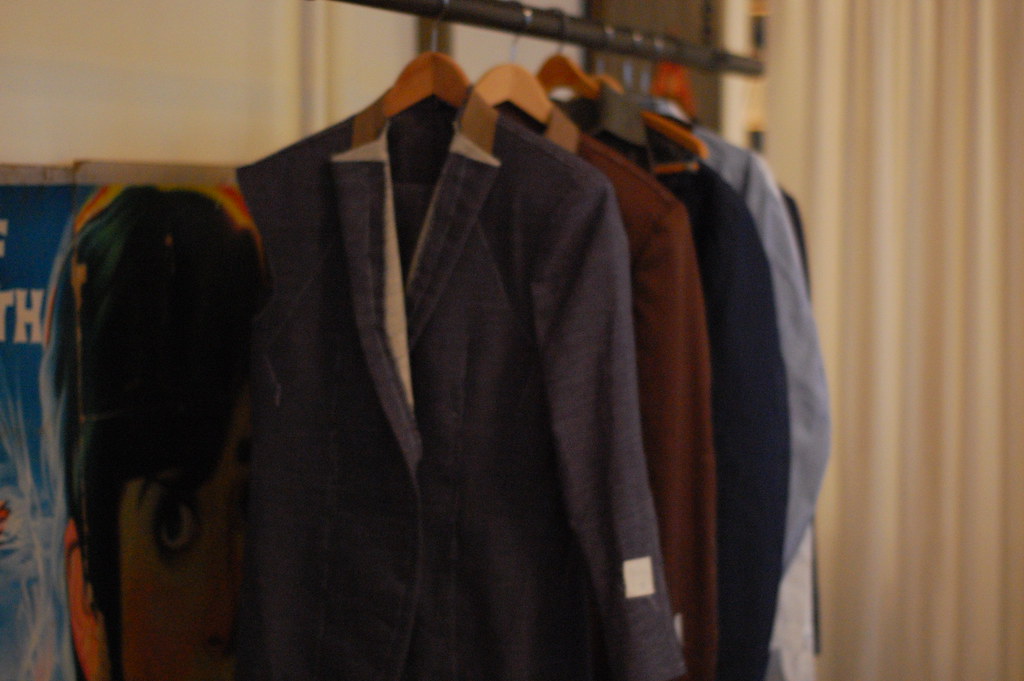
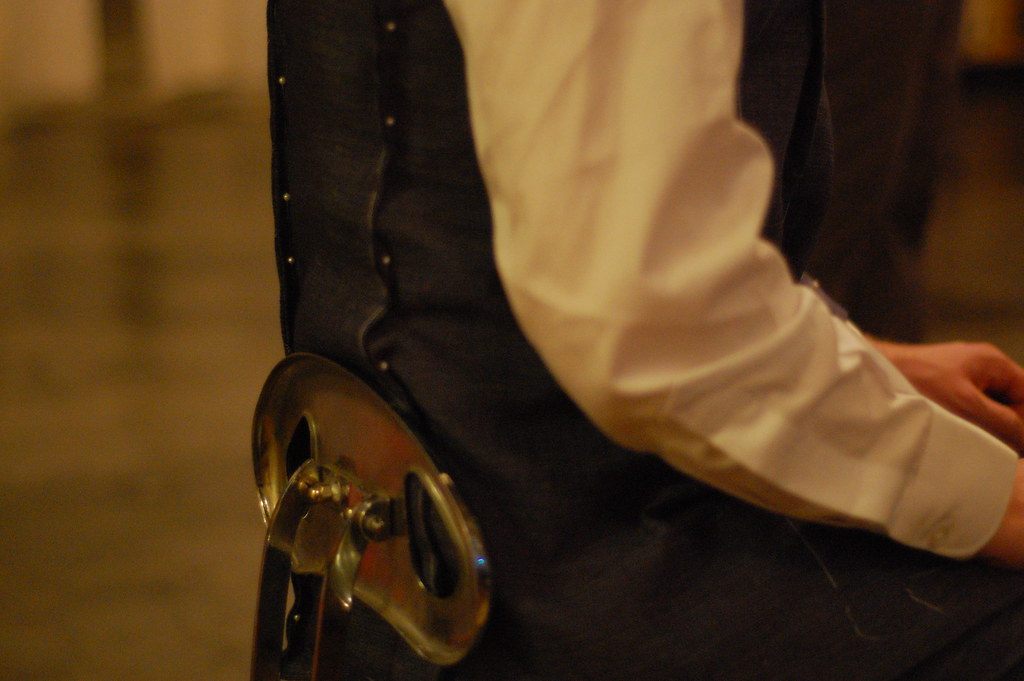
The baste stage. My suit is beginning to take shape...and what an agreeable shape it is to as it proudly stands on the clothes rail.

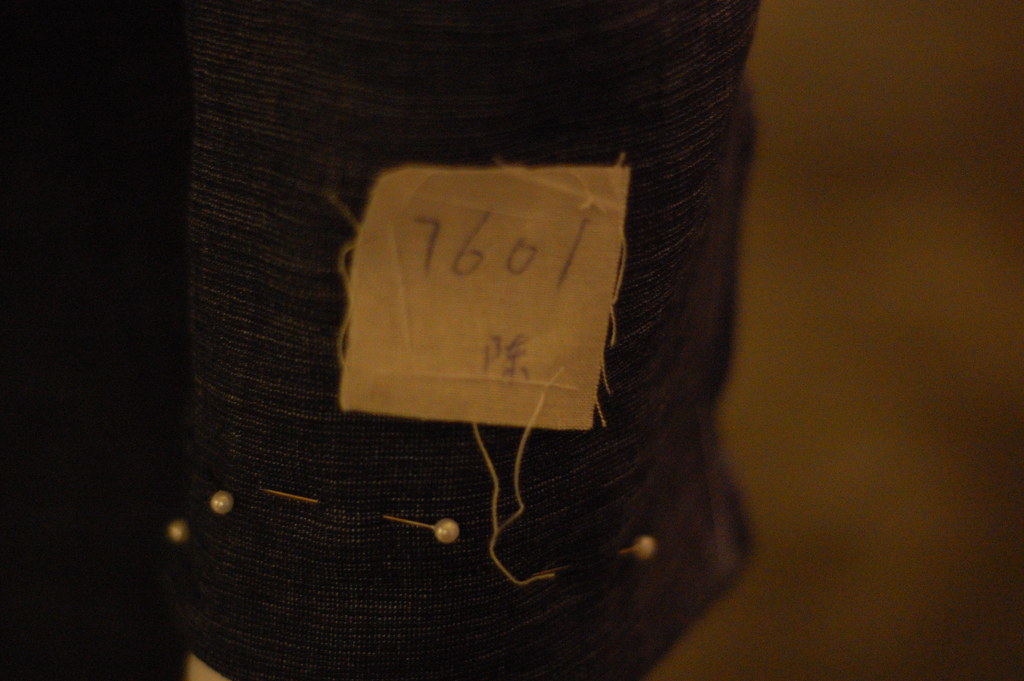
A few days after our initial meeting I returned to the studio for my first fitting. As I entered the room I had no idea what to expect but excitedly looked for the first sight of my baste. A baste is a half-made suit that is not properly finished and only temporarily held together with white baste stitching. This allows it to be easily taken apart and remade. It is is the blueprint for the finished suit and can be radically altered if necessary. Thankfully, no drastic alterations were required, only a few tweaks.

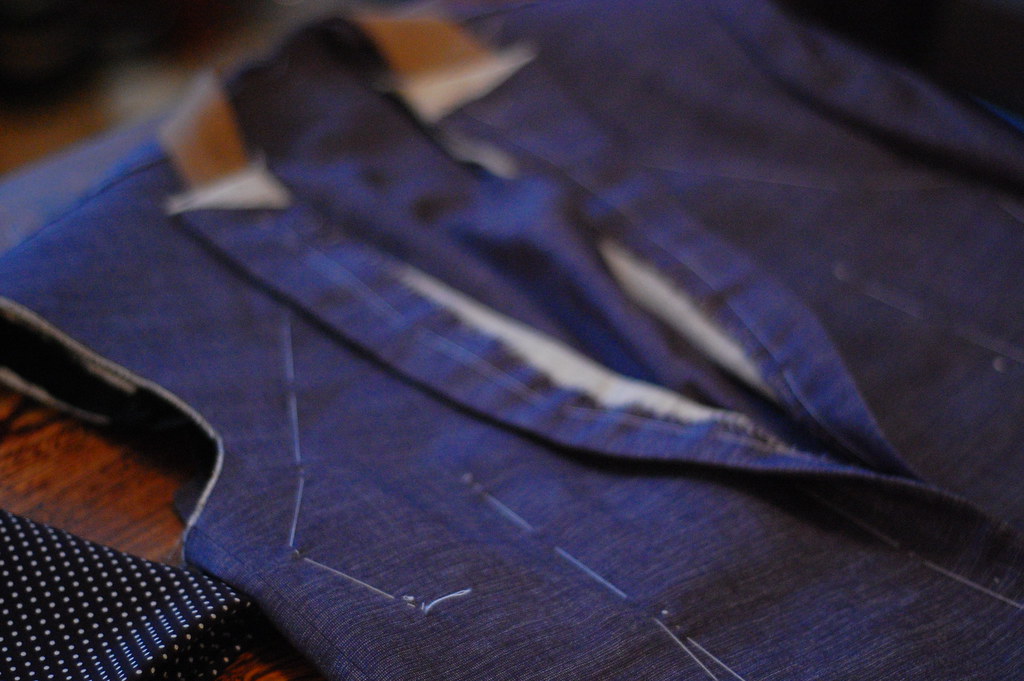
A close up of the baste and my choice of sleeve lining.

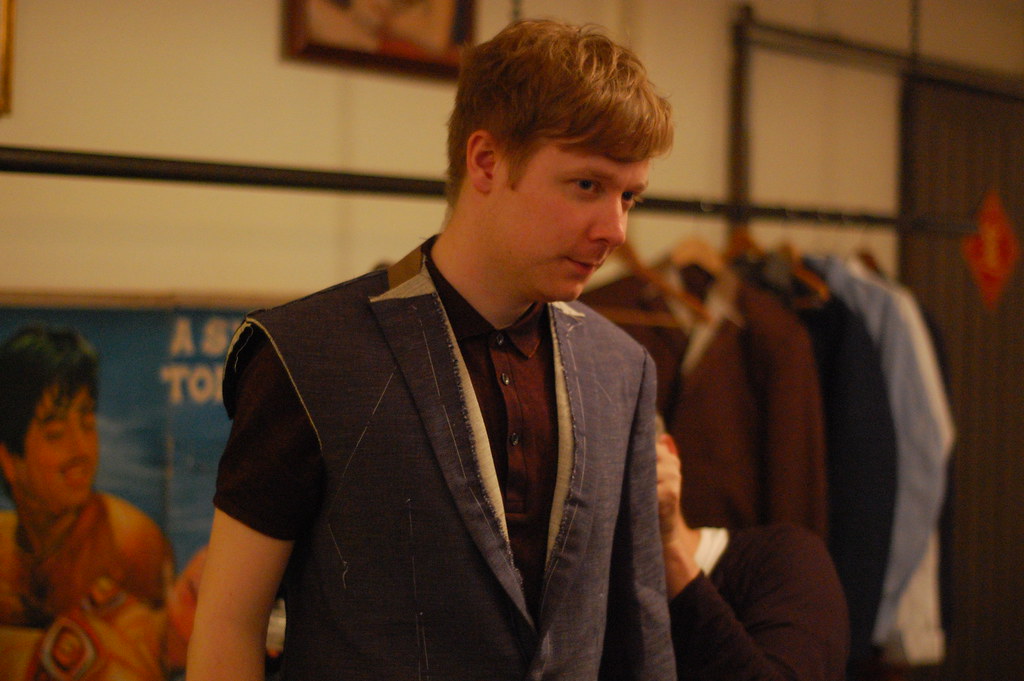
From the above shots you might have noticed that only one arm is attached at this stage. The reason for this is that only one arm is needed to judge the length and pitch of the sleeve at this stage (unless the initial measuring established that the client had one arm significantly different to the other...). Why the left? Well, just because it is easier for a right handed tailor to make amends where required.

Finding the right pitch...

After reading Simon Crompton's recent bespoke suit fitting experiences I recalled that one of the most important things to discern in the sleeve at this stage is its correct pitch. By this I mean how it hangs in relation to the body. If there is more material in the back of the sleeve, it hangs forward, more in the front and it will hang further back. Unlike Simon it seems that my arm hangs a little forward. Ellis soon made the required adjustments by inserting a few pins where necessary.

Opting for a shorter sleeve...this shot captures the appearance of the cross hatch fabric extremely well.

Throughout this whole process I trusted and had full confidence in Ellis. He seemed to know exactly what I wanted. After succinctly describing exactly what I wanted the suit to be and how I would wear it, he was soon in tune with my way aesthetic. After I confessed that I was in the habit of rolling up my suit jacket sleeves during the Summer he suggested cutting them a little shorter to reveal more cuff. Furthermore, the addition of the polka dot sleeve lining would make for a more interesting reveal in the warmer months. As he expertly attacked the baste with pins my confidence and excitement continued to grow.

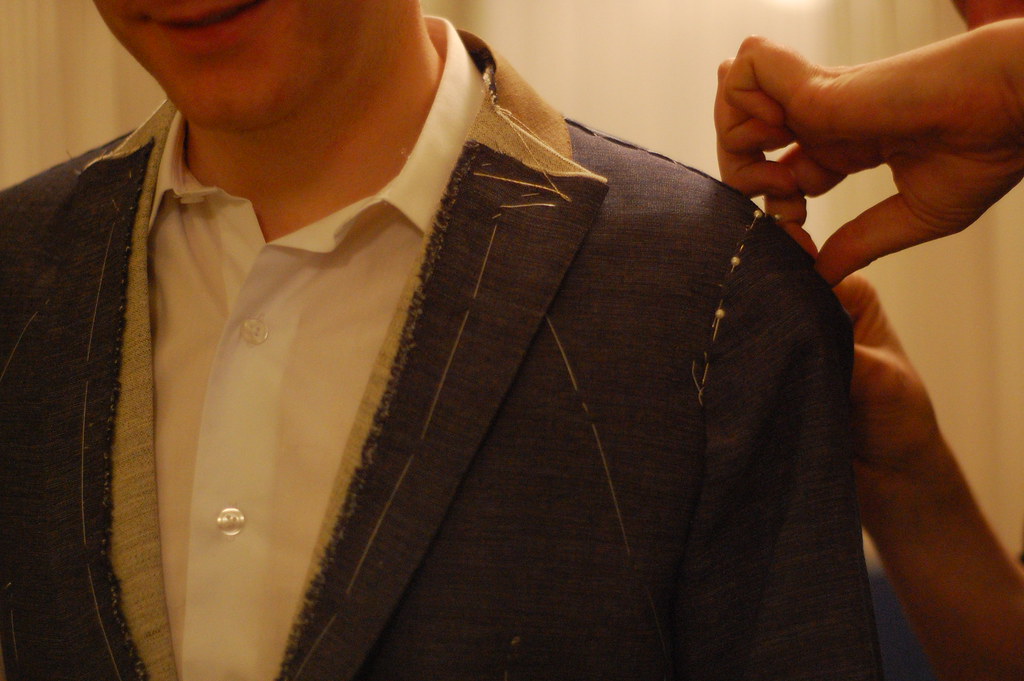
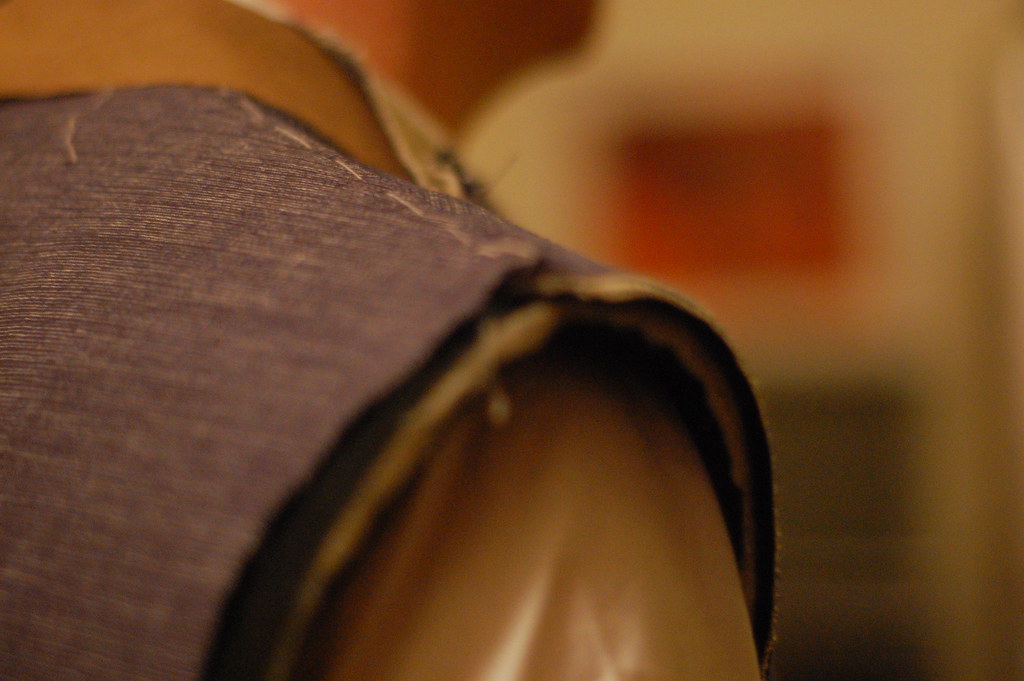
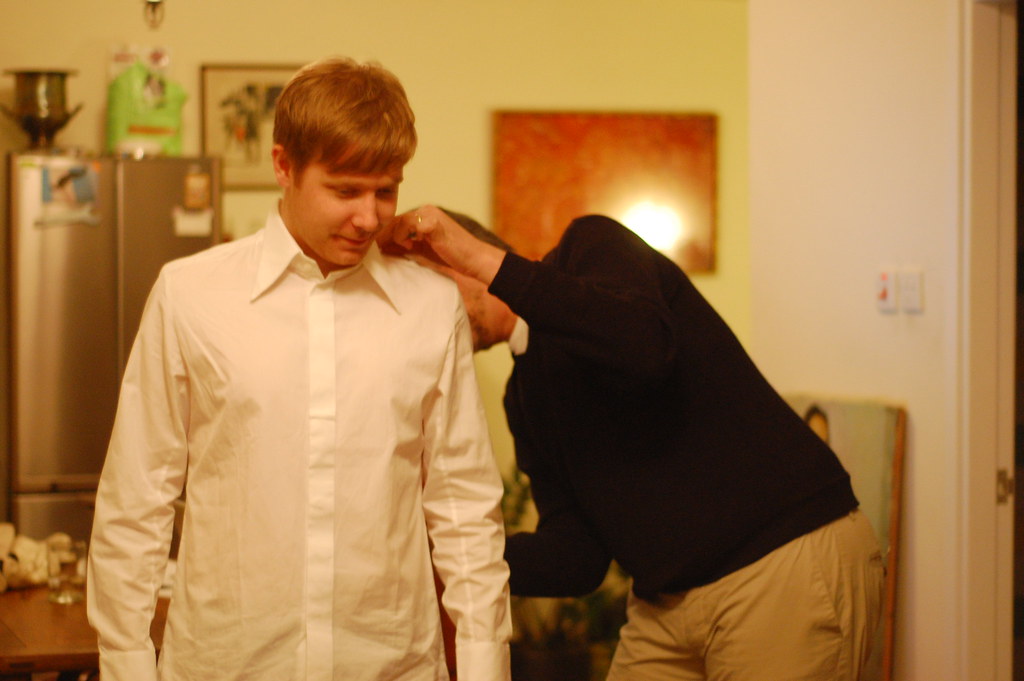
The re-pinning of the shoulder.

At one stage the eager eyed Ellis was not one hundred percent happy with how the shoulder was lying so re-cut it and re-pinned it to make it much tighter. We were soon both happy with the shoulder and sleeve and moved our attentions to the lapel and collar.

Showing off a little cuff and collar.

The obsessively observant amongst you might have noticed that I have changed shirts in this series of images. The reason I had to change out of my recently acquired Raf Simons x Fred Perry Polo and in to a white shirt is simply to ensure the suit is correctly fitted. The white shirt enabled Ellis and I to work out exactly how much cuff and collar we wanted the suit jacket to reveal. As we've declared time and time again on the blog, the real beauty of menswear lies in the details. I spent a great deal of time with Ellis ensuring that the details were well thought out, as the finished suit (should) ultimately demonstrates.

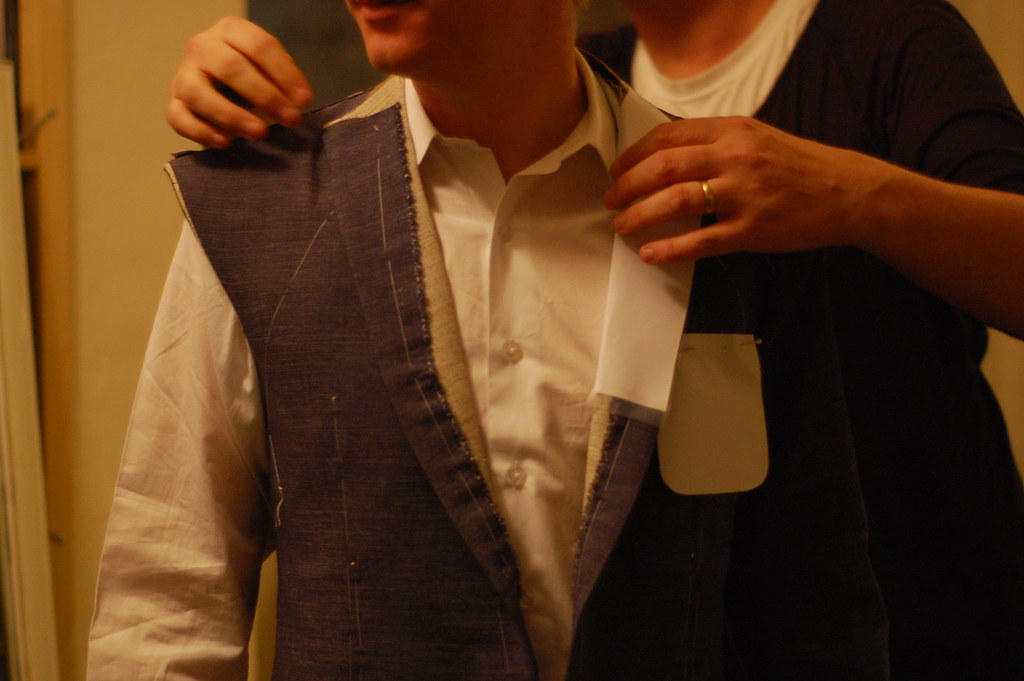
Working out the lapel

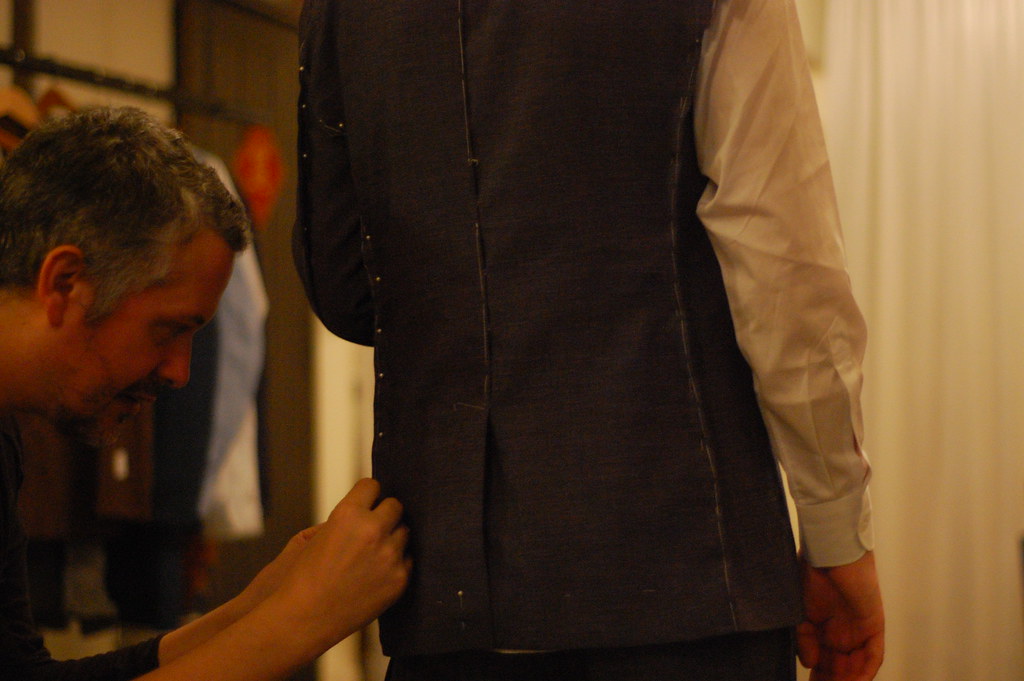
Following the good work on the front of the jacket, Ellis soon turned his attentions to the back of the jacket. I have to confess to possessing a highly curved back...a 'girlie' back if you will. The result is that most of the suit jackets I own do not sit well and there is a collection of cloth below my shoulders. Ellis attacked the cloth with pins once again and after a few insertions, I was soon left with a template which fitted me like a glove.

Hiding the flaws whilst accentuating the positives.

The real beauty of a well measured, well made suit is that it will hide any flaws and accentuate the positives. Rather than look a little odd, this suit jacket was sure to accentuate my silhouette in the most positive manner possible.

The sit down test.

When we were both pleased with the result in the mirror, Ellis asked me to perform a quick seated test to ensure I could sit comfortably in my new tailored second skin. Having passed with flying colours, the suit jacket was put to one side and the focus was on my lower half.

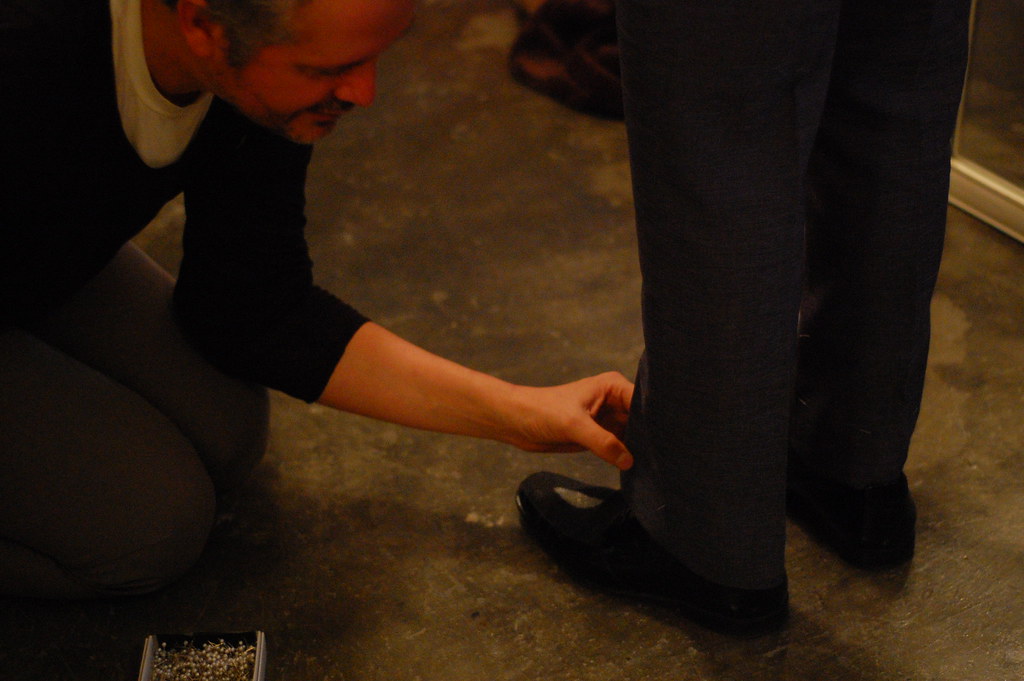
Making light work of the trousers...

I've always had trouble with trousers. Just ask my family. They will recall with much laughter how they used to buy school trousers which were aimed at children twice my age just so they could fit my expanded waist. These of course were far too long for me and I was something of a squat child and so my Nan had to amend them before I was able to wear them to school. I kid you not, even at a young age my trousers were wider than they were high. I can only laugh about it now. Thankfully, most of the puppy fat has gone but I'm rarely happy with how a pair of trousers fit me off the rack. However, as soon as I tried on this work in progress I knew these would become my new favourite trousers.

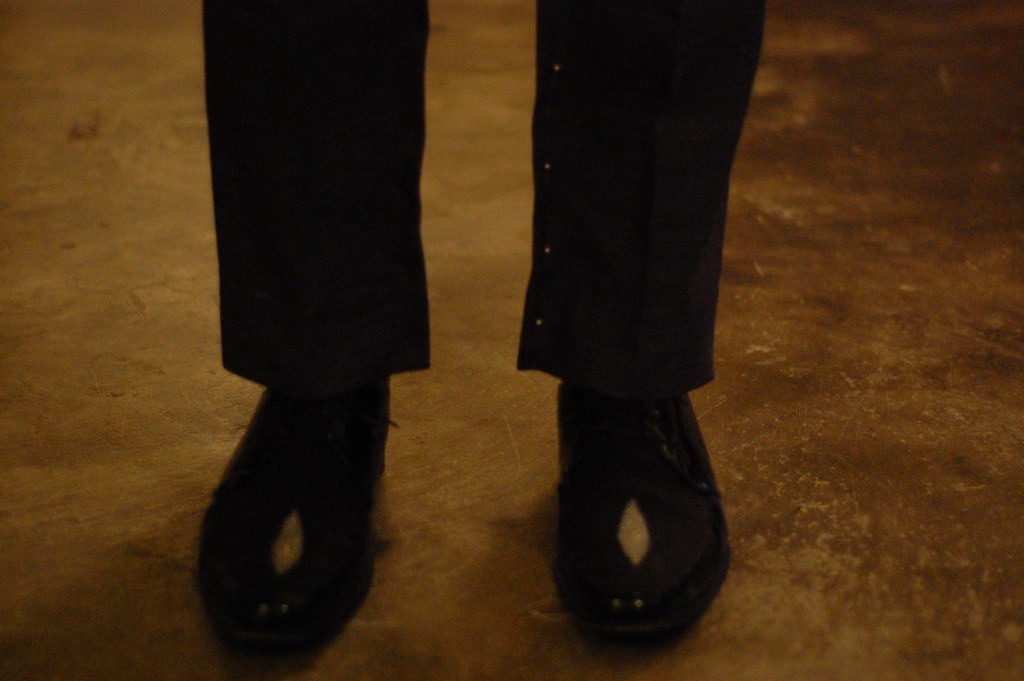
Showing off my Mr. Hare's...it would be rude not to.

The initial cut was near perfect. The odd little tweak on the length and fit were the only required amends. As I wanted this suit to be my ideal relaxed Sunday Best I opted to go a little higher and reveal a little more sock and shoe than I normally would. After investing so heavily in my shoe options in recent months it is only right that I wear trousers which show them off.

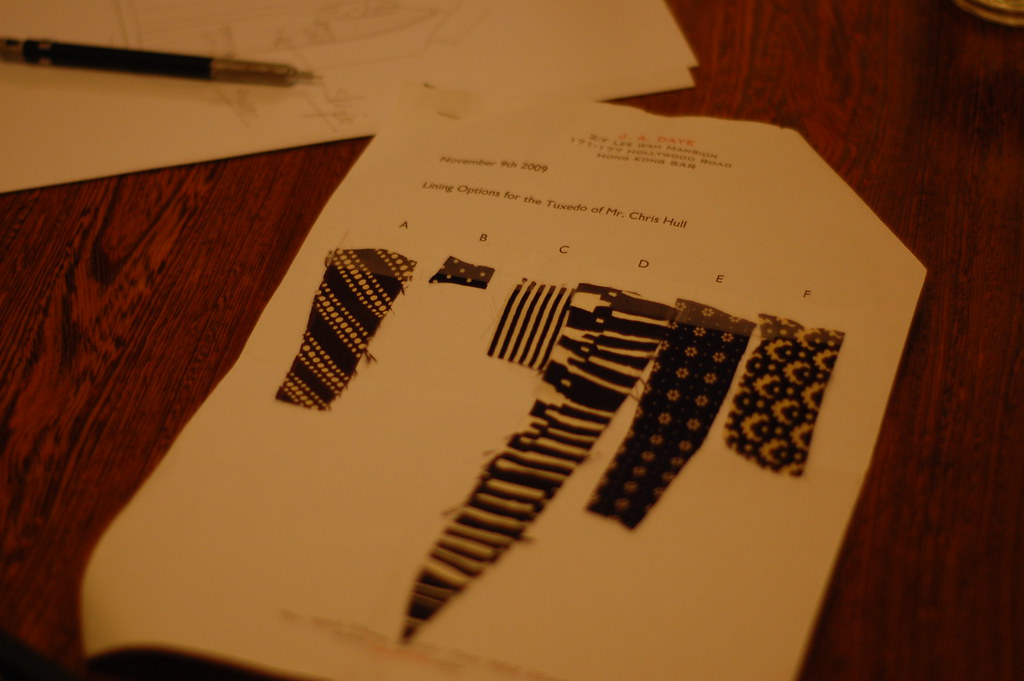
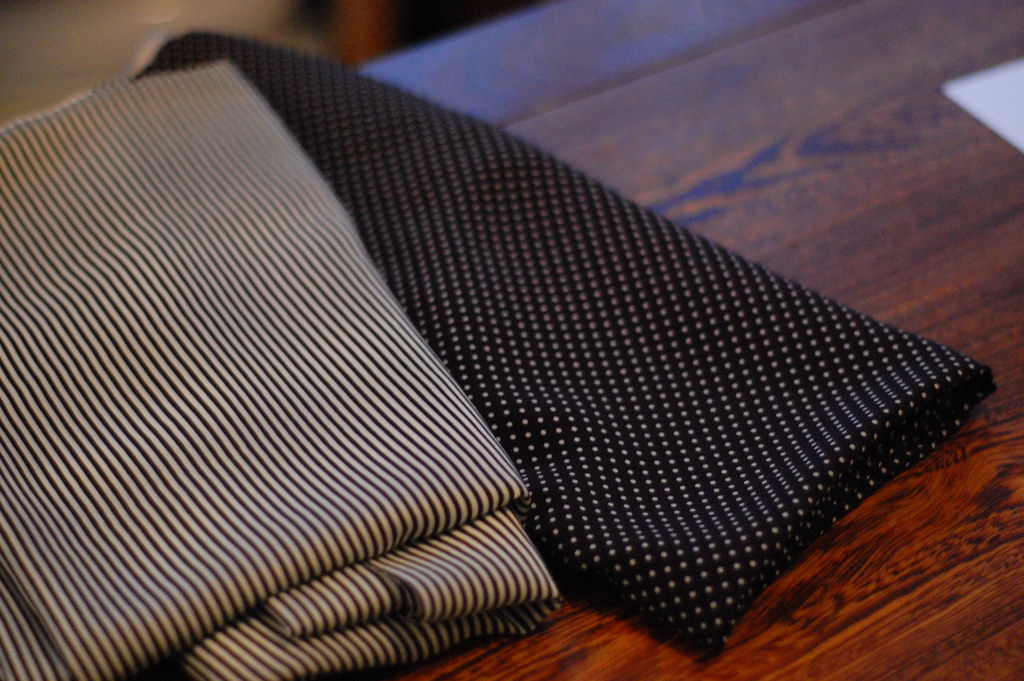
My final lining choices

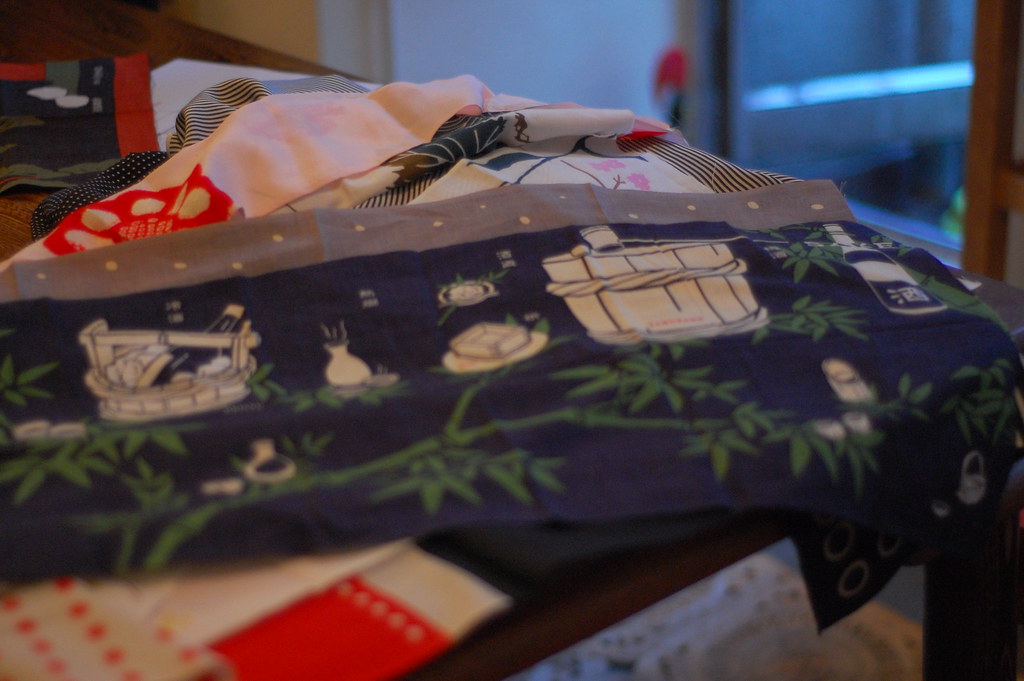
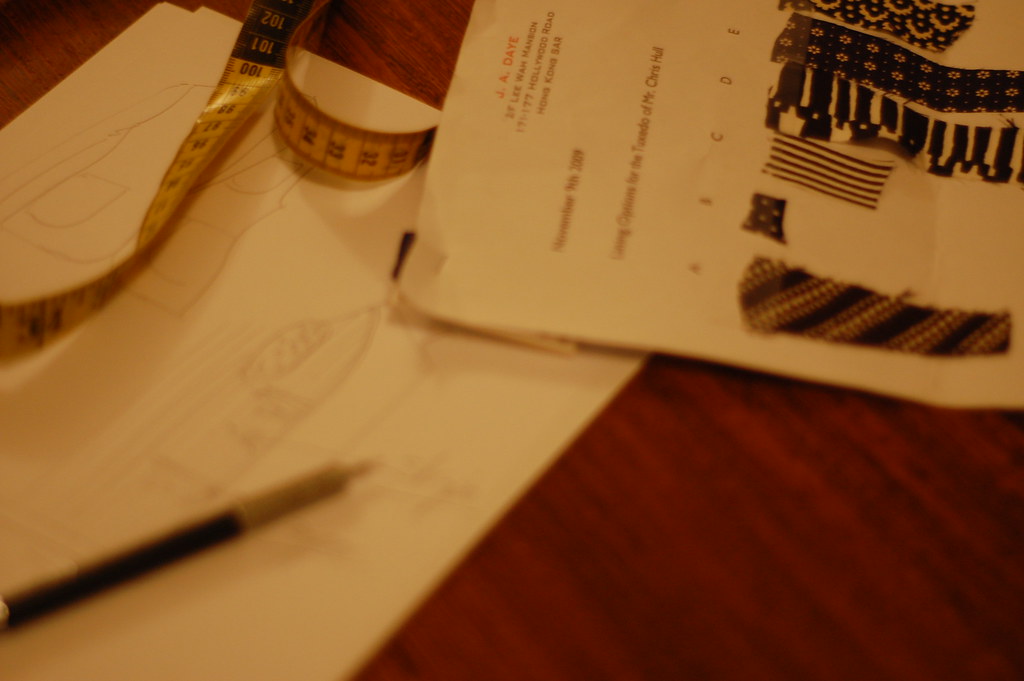
As Ellis made light work of marking out my ideal pair of trousers we put the fast evolving baste to one side. This blueprint would soon be passed on to one of j.a. daye's expert local tailors to make my suit. Before it left the studio there were still a few finishing details to discuss. Most interestingly, for me at least, were the lining options. As mentioned yesterday, I had fallen for the idea of having a polka dot lined sleeve and contrasting striped body but I still had to choose which particular fabrics I wanted. To help me make my choice, Ellis brought out an array of different fabrics that he had collected on various trips to Japan and beyond. The array of options actually made my decision more difficult especially as I was enamoured with the traditional Japanese prints. Sensing my confusion, Ellis put forward the idea of adding a strip of my favourite print to the trim. It was an inspired idea. Decision made, I just had to play the waiting game.


The final sketched vision (below) combined with my re-cut and amended baste would soon make my sartorial dreams a reality. Tune in later this week for the final post on this series which will showcase the end result!

The final sketch...

My made to measure (part one)

Ready for made for measure.

Long time readers will know how often I have dreamed of entering the world of bespoke and made to measure suiting. The thought of having a suit made to my own personal specification and desire has appealed to me for many years...now, thanks to my recent trip to Hong Kong the wait is finally over and the dream is realised. Despite being told of the numerous wonders of Hong Kong, I have always been drawn to the idea of exploring the countless little tailor shops scattered throughout the city. However, as my last minute post asking for your help demonstrated, I was more than a little bewildered by the abundance of willing and able craftsman at my potential disposal and I needed to make a choice between them. Thanks again for all of your recommendations, when I return to Hong Kong next year I will be sure to explore them fully (first on my list is the oft recommended W. W Chan) but I just ran out of time this trip. As it turned out I managed to stumble across the perfect tailoring shop to guide me through my first made to measure suit via an eye catching guide book, j.a. daye. I was intimidated by the choice of having to pick out my tailor but my find bridged the gap between what I am used to and what I needed. j.a. daye is my idea of what a good twenty first century tailor should be, a bespoke experience for a generation raised on the ease of ready-to-wear shopping, with classic styles made with a distinguishable modern point of view in unexpected fabrics. From the moment I stepped in to the store and met the owners I knew that this was the place for me. Having found my tailors, let me take you through my journey in to made to measure. Here I choose the suit, get measured up and work out the initial design features with my tailor but tune in later this week for the next stages...

Finding the suit that inspired it all...

The studio and store are both in the heart of old Hong Kong and all suits are made by a small network of expert tailors. After stepping inside their store it was not long before I had established the perfect suit to kick start my first foray in to made to measure tailoring. The suit jumped right out of the clothes rail and I knew that it would make my ideal lightweight Sunday best. Following a quick chat with proprietors Ellis and Alex, I discovered that the suit is made from a crosshatch-like weave which appears both traditionally Japanese and very modern at the same time. From a distance, it might be denim, but it is so fine and delicate to the touch that no doubt I will actually lament taking it off at the end of the day. Following this inspired choice I excitedly trotted off to the tailoring studio to get measured up.

The first measurements. Here I am being measured by the lovely Ellis. Fittingly, I am wearing my handmade in england shirt (closing down sale purchase from Jas M.B) for the very first time.

One of the reasons for choosing either a bespoke or made to measure suit is that the end result is certain to make the wearer look so much better than anyone else in the room. Not only will you look slimmer, taller and more pulled together, but you will move much more freely and feel totally at ease. You should feel as relaxed in it as you would in your favourite pair of jeans. To reach this level of ease, the first stage requires the tape measure. I have to confess to being a little nervous as the first batch of measurements were recorded.

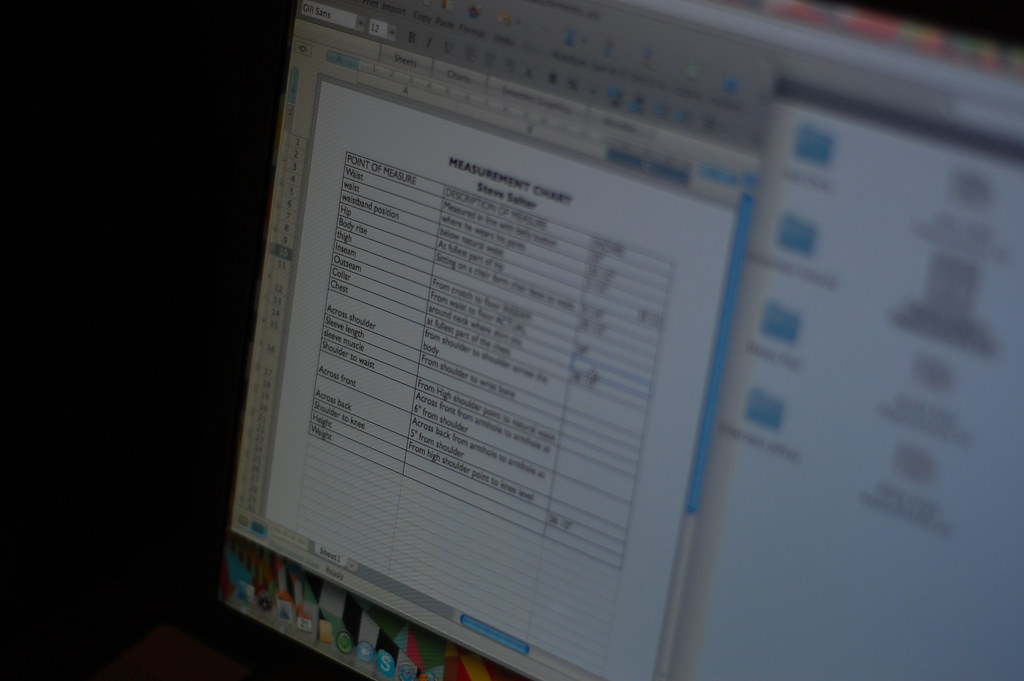
Compiling statistics.

This was the first time that I had been measured up and I really didn't know what to expect. Thankfully, old hand Ellis soon made me feel at ease and I found the whole experience enjoyable whilst learning a thing or two. If you are a little unsure of the process, the pair have created a series of fourteen videos documenting how you can take the required points of measurement yourself. After the measurements were recorded the real fun began as Ellis and I began to sketch out our shared vision of what the suit could and ultimately would be...

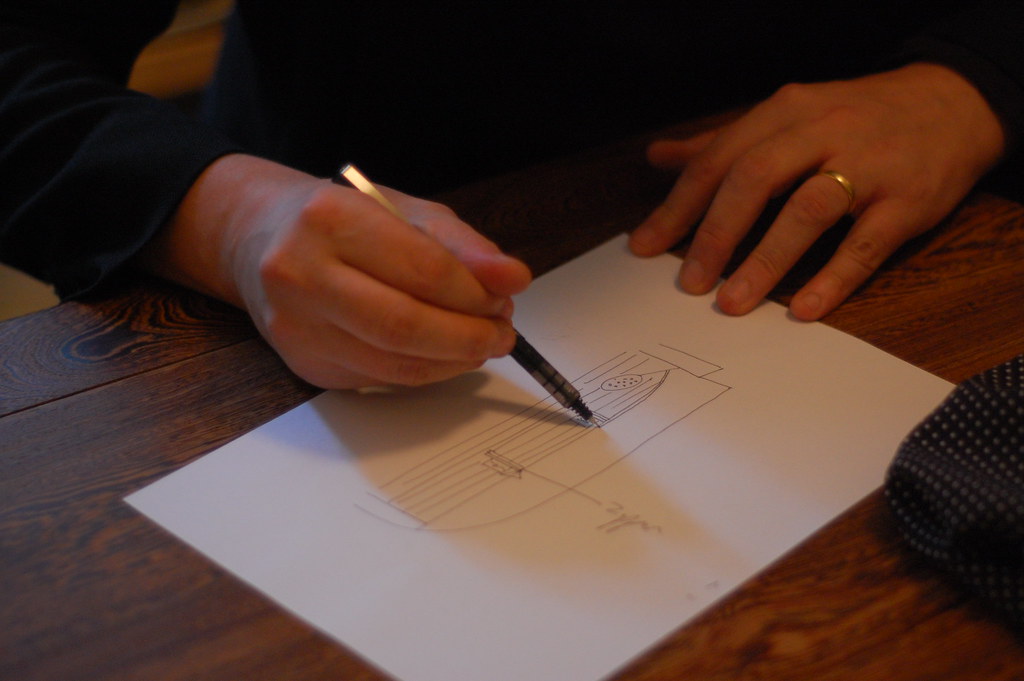
Ellis sketches out our shared vision.

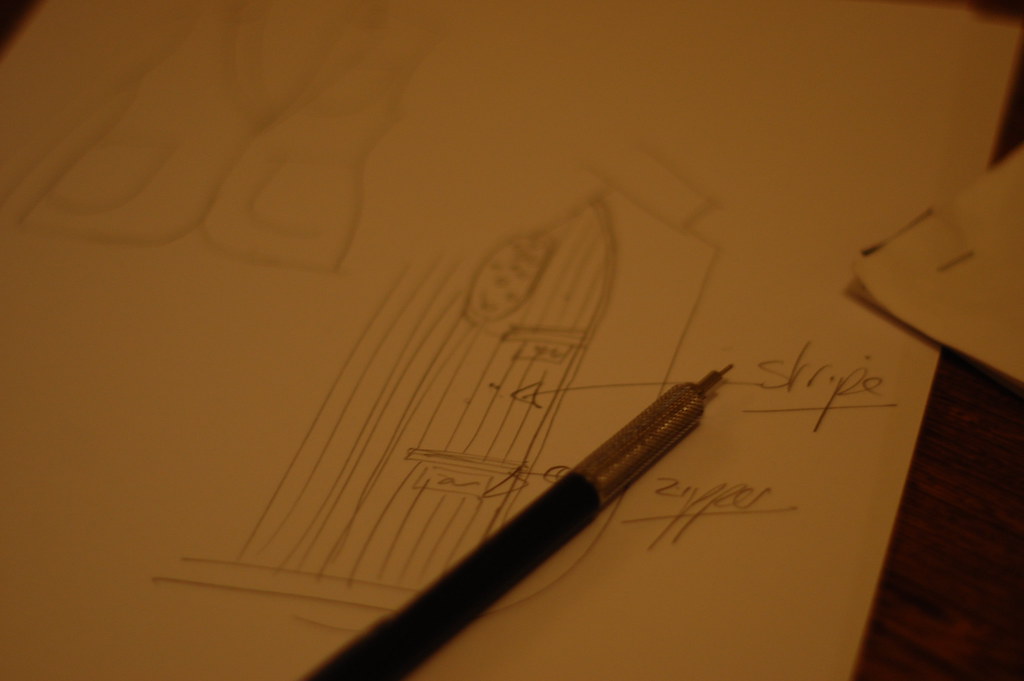
Prior to my Hong Kong visit I had given my ideal suit a great deal of thought and I had a pretty good idea of what I wanted. That said there were a few points I needed the tailor's guidance on and Ellis was extremely talented at probing for my input and turning my responses in to something tangible. With pen in hand, his sketches soon took shape and I knew that he would create my perfect Sunday best.

Working out the finer details

There was so much to consider but as I chatted with Ellis my imagined suit took shape. As I had fallen head over heels for the cross hatch voile two piece in store I didn't want to change too much. In short, I wanted to keep the one button closure at waist, the three patchwork pockets at front and the three inside pockets. For me, this is relaxed tailoring at its finest. However, I had to inject my own personality in to the finish of the jacket in particular. After discussing the options, I decided that the sleeves would be lined in a polka dot silk and the body would be complimented with a striped silk. Having made this decision I could not have been more excited about donning this suit for the very first time. This of course had to wait. At least one fitting (more likely two) was required before the suit could be fully realised and created. to my specifications. We left the first meeting there and I left the studio eager to return for the next stage...

The imagine suit..soon to be realised...